Metta: Loving-Kindness Meditation and Small Daily Steps
Loving-kindness meditation and metta in daily life: notice dislike, answer it, find the beliefs beneath your thoughts and be kind without forcing yourself.
MYZA Team · 20 min read
Upd. 10/30/2026Updated Oct 30, 2026

Key takeaways
Metta is kindness, brotherly love, the first of the four brahmaviharas; its practice is often called loving-kindness meditation. It isn't a feeling to squeeze out of yourself but an action: in the suttas the basic practice is called adosa, non-hatred. Small steps: notice dislike in your thoughts, answer it, repeat “may everyone be happy”, look for deep beliefs like “the world is hostile”. Be kind to yourself: acknowledge tiredness of people and don't do good by force. In meditation it's the same practice: a phrase, a pause, observation.
Morning, rush-hour traffic. You've been crawling along in your lane for fifteen minutes, and a shiny SUV squeezes in right in front of you. No turn signal — apparently they don't come with that trim level. Something inside you boils over instantly: “Oh sure, you need it more than the rest of us.”
What small steps help you grow kindness every day — not only on the cushion, in loving-kindness meditation, but in ordinary life? The whole practice is made of steps like these. And the first one can be taken right there in traffic.
What is metta?
Metta is kindness, love. The closest word is probably the Greek agape: the love of brothers and sisters. Around the world the practice is usually called loving-kindness meditation. In the Buddha's time it was considered a basic practice that brings a person closer to the worlds of Brahma — the highest god the ancient Indians could imagine.
Metta is the first of the four . The other three are compassion, sympathetic joy — being glad for others — and equanimity.
A “vihara” is a bit like a bus shelter in a downpour: it belongs to no one, it was put there for everyone, and anyone caught in the storm can step under it. The brahmaviharas are shelters like that — less states than ways of seeing the world. Outside aggression barely reaches someone settled in them. That's why the commentarial tradition sometimes calls metta a protective practice.
Everything starts with metta: compassion, sympathetic joy and equanimity — treating everyone with the same evenness — grow out of it. You don't have to specialise in the brahmaviharas on the way to awakening: the lead to Brahma's worlds too. But in its basic form, everyone who follows the Buddha practises metta. And in the suttas that basic form is called adosa.
Metta is adosa, non-hatred
Dosa is anger, hatred, ill will. “A” means “not”. Adosa is the practice opposite to hatred, and for a Buddhist it isn't optional. The has the famous line: hatred is never ended by hatred, hatred is ended by love. But the original doesn't say “love” — it says adosa. Dosa ends only through adosa.
Metta is often taken for an emotion — as if you had to squeeze warm feelings for people out of yourself like the last of the toothpaste. But the practice of metta isn't about feelings. Feelings may come later. At its root is action.
«Metta isn't a feeling you squeeze out of yourself. It's something you do.»
The suttas name three kinds of action: thoughts and intentions, words, deeds. The mind comes first: behind every word and deed is an intention. Put plainly, dosa is hostile thoughts, and adosa is thoughts pointing the other way. That's where to start.
Step one: notice dosa
To talk back to hostile thoughts, you first have to see them. The first step is watching what goes on in your head.
In everyday life dislike runs on autopilot, like a background app. Or indifference — the same dislike, only cold: when people and animals seem not worth our attention. On top of that, many of us were raised to see the world as a battlefield and everyone around as a potential threat. Kind thoughts? Hard to have them while you're busy looking for your body armour.
Step two: talk back to the thought
A common mistake: a hostile thought shows up, and it feels like “this is what I think”. You start arguing with it — and who's arguing with whom? You end up with an inner quarrel and a sense of faking it.
But thoughts come out of upbringing, childhood, habits and a hundred other causes. You don't so much think them as they show up. The only question is what you do next.
To begin with, talk back. Deliberately put another thought next to it: this person is the product of countless circumstances. Few people work on themselves, and we're only at the start of the road too. The guy in the SUV is part of the scenery, like traffic lights and potholes. He isn't obliged to meet our expectations just because he ended up in front of us.
Or simply note it: aha, the dislike program is running again. I see dosa. The noting itself opens a gap between you and the thought.
A hostile thought isn't «what I think». It's a program, and you can talk back to it.
Ready-made phrases
The tradition has ready-made phrases. “Sukhi hontu” in Pali wishes happiness to many, “sukhi hotu” to one. You can also make up your own words.
In the commentarial tradition, a monk who has chosen metta as his main practice walks with prayer beads, repeating: sukhi hontu, sukhi hontu. There's nothing like it in the suttas, and it probably won't do much for most people today. But it's worth a try in the pauses among people: on the street, on the subway, in traffic. To the rhythm of your steps or your turn signal. Bonus: you'll actually use your turn signal.
May everyone be happy. May everyone be happy. And this person too — even without a turn signal.
Try it right now
A minute of loving-kindness meditation
- Think of someone who irritated you today.
- Silently repeat in rhythm with your breath: «May you be happy.»
- If something inside objects, «they don't deserve it», notice that and carry on.
- When the gong sounds, see what has changed in your body.
Each repetition, done with attention rather than by habit, is a small drop of good karma. Whatever gets your attention grows. Like a path across a lawn: at first you can't see it, and a month later everyone's using it.
Constant repetition isn't for everyone. But talking back to dosa is for everyone. If your dosa runs strong, take it as a signpost: you're exactly the person for whom metta practice makes the most sense.

Step three: find the belief beneath the thoughts
Thoughts are the top layer. Underneath are the beliefs that produce them: “the world is hostile”, “people are pretty poor creatures”. Those are worth looking for.
Digging for the root cause is worth it, depending on what you call the root. Psychoanalysis looks for it in childhood, in the past. The Dhamma digs not back but down: if thoughts pop up on autopilot, they have a root — a deep belief, what's called a latent defilement.
Once you've found a belief, deliberately write in a counter-belief. “The world is hostile” becomes “the world is neutral towards me”, or even “the world is kind to me”. That doesn't mean it really is kind: it's one wedge used to knock out another. The first wording may come out clumsy — that's fine.
The belief
The world is hostile
The counter-belief
The world is neutral towards me
The belief
People are pretty poor creatures
The counter-belief
Everyone is a product of their surroundings
The belief
Reality should match my expectations
The counter-belief
People can behave any way at all
The test is simple: does it get easier? Can you relax outside the walls of your fortress? Fear of the world is a kind of dosa too. Essentially this is psychotherapy, work that takes years. But awakening isn't on hold until every belief is reworked: it all runs in parallel.
When irritation is just tiredness
Sometimes a “habit of getting angry” isn't a habit but a feature of the psyche. Sensitive people — and that's not a bug, it's a feature — have a social battery that drains fast. When it does, tiredness, irritation and the urge to hide in a burrow pile on. It looks like dosa, but it needs a different fix.
Cat owners know this: a cat can be the life of the party for half an hour, rubbing against every guest's legs, and then silently vanish into the closet. It sits there, recharges, and strolls out as if nothing happened. Nobody calls it a bad cat.

These mechanisms need to be acknowledged, and you need to make sure tiredness doesn't turn into dislike. First, give yourself rest. Many of us were taught that getting tired of people is bad, so we drag ourselves to a loud school reunion because saying no feels awkward. Even though an evening of other people's mortgage stories is hardly a rest.
Saying no is fine. “These gatherings wear me out, I'd rather stay home. With all respect.” Calmly owning traits like this is metta too — towards yourself.
Getting tired of people is normal. Rest is kindness too — towards yourself.
Second, meditation shows how dislike forms. Recall dependent origination: first the senses make contact, then and — perception labelled “pleasant” or “unpleasant” — and from them craving, clinging and the rest. What tires you isn't the people themselves but this subtle, almost animal mechanism of describing the world, running on autopilot.
At a certain depth of meditation you can see it: describing on, off, on. You build a trained eye, and the ability to switch the describing off carries over into daily life. The people are there, the contact is there, but the labelling doesn't kick in. And — miracle — no tiredness. You can't strictly call this metta, but the movement towards adosa is happening at the deepest level. You won't see it without meditation.
If there's anxiety inside
And if you can't see any describing, just anxiety? Then it matters less to stare at it than to stay alert: know it's there and look at what's underneath. Either a deep belief — in essence, a trauma. Or your make-up: some people are more anxious by nature, and for some it becomes chronic.
The ladder is the same. Thoughts — talk back. Beliefs — find them and write in counter-beliefs. And if everything seems fine but something gnaws inside, that's the level of meditation, and it deserves more time.
In severe cases it makes sense to see a psychiatrist. Generalised anxiety disorder is often eased by a course of medication, such as antidepressants, and there's nothing to be ashamed of. Over the years the brain wears habitual paths, and chemistry — neurotransmitters — is at work there. Rewiring that by willpower alone is very hard. Sometimes it's wiser to change the structure through chemistry and meditate alongside: the process goes much faster.
You can do without medication if you have the conditions for intensive meditation: a calm setting, no need to work or worry about anything. If you don't, it's worth considering. Constant vague anxiety is a clinical sign and a reason to talk to a doctor.
Honesty with yourself and your shadow
This takes honesty: owning your thoughts, beliefs and traits. If you cling to an invented picture of yourself, you push out part of your inner reality and can't go deeper into wisdom and the Dhamma. You'll spin your wheels. And often this pushed-out shadow is exactly what makes us dislike others.
Take over-control, drilled in since childhood: control everything, get everything done, or something terrible will happen. The person sees no problem — they do get everything done, they're just always on edge. Then they move in with a roommate who leaves the dishes “till tomorrow”, and tomorrow “till the weekend”. The weekend plate is practically an art form. And the anger is bigger than the cause, because their own over-control is pushed out: “I'm fine, he's the problem.”
If you own it and even laugh at it, it loosens its grip. And instead of fighting the roommate over “right after dinner”, you agree on a dishwasher.
«We aren't kind to others because we aren't kind to ourselves.»
Dosa towards the world often grows out of dosa towards yourself. “I” isn't a solid subject responsible for everything inside, but a bundle of processes, and identifying with them is a mistake. You can watch them kindly rather than like a prosecutor: here's anger. Curious — why right now?
Sometimes it helps to talk to your mind, your citta, directly, as you would to a child or a puppy: “Why are you angry again? This person isn't doing anything wrong, and we do the same thing ourselves.” The puppy doesn't always listen the first time, mind you. Neither does the mind. But you learn to see the world through other people's eyes.
When kindness is met with rudeness
It happens: you treat someone with all your heart — and get rudeness back. And you just can't accept it. But plenty of people are rude, and not all of them sting like this. So there's a second factor: deep down you expected the same in return. And the person is simply part of reality.
A very common belief is at work: reality should match my expectations. It can rain for your entire vacation, and writing the rain an angry review is pointless — it doesn't read them. We control other people about as well as we control the weather.
So before doing something kind, you can ask yourself: if they answer with rudeness, am I still willing? If not, better not to. If yes, it's honest — towards them and towards yourself. Epictetus said: don't demand that things happen as you wish, but wish them to happen as they do, and you will be happy. Well put. The whole question is how.
The first and second arrow
Inflated expectations are one form of the second arrow. The first arrow is the pain itself, physical or emotional — that gnawing anxiety, for example. If you start picking at it, thinking, solving, wanting it gone, that's already the second. That's the one Buddhism works with.
Very simply: when the first arrow lands, accept it and watch it as part of reality. Sit and stay with the feeling. No state is permanent: if you don't feed them, they pass.
The second arrow
Picking at the anxiety: thinking, solving, fighting it
Staying with the first arrow
Accepting it and staying with it — it changes by itself
The second arrow
Taking offence that reality doesn't match expectations
Staying with the first arrow
Rain on holiday is just rain
The first arrow never vanishes entirely. But the second turns out to have layers: coarse ones — worries, thoughts, fear — and ever subtler ones, down to that same describing. When that switches off too, there are signals but no “pain”. , judging by the suttas, still feel injuries and discomfort: hold a finger near a flame and it's unpleasant. But for them the second arrow is off at every level, and it's no longer suffering — just a phenomenon.
There's no single instruction for everyone. The suttas give a direction, and then you watch yourself. A journal helps a lot: today, in this situation, there was anger, possible reasons such-and-such. The data adds up, and a lot becomes clear. Sometimes you discover, for instance, that half your irritation happens before the first cup of coffee.
Loving-kindness meditation
Some say metta comes as a result of meditation, and developing it beforehand is putting the cart before the horse. It's more useful to see two levels. The first is the basic, everyday one, at least as adosa. The second is loving-kindness meditation, and it's impossible without the first: it continues the same practice.
- 1
Repeat the phrase
Sit and silently repeat: “May everyone be happy.”
- 2
Pause
Notice how your mind and body respond to the words.
- 3
Repeat again
And pause again. Calmly, attentively.
- 4
Don't rush it
Gradually there's a sense of being filled with it, and then it spreads around you like an atmosphere or a radiance. No need to imagine it on purpose; it happens by itself. If you can feel such a field, it's most likely already jhana.
The Karaniya Metta Sutta comes with a story. Some young monks went into the forest to meditate and grew uneasy: animals, darkness, crackling, shadows. They decided the forest spirits disliked them and went back to the Buddha: it's too frightening. The Buddha gave them this sutta and told them to recite it. The monks did — and the spirits stopped troubling them, and later even grew fond of them.
In today's language: the Buddha gave the monks loving-kindness meditation, and through metta the fear went away. The First Letter of John says something similar: there is no fear in love. For many people this meditation comes easily: they repeat “may everyone be happy”, and the world slowly stops being a battlefield. There's suffering in it, but everything is shot through with love. And there's a sense that the love isn't “mine” — it passes through, like light through a window.
A morning ritual — needed or not
A morning or evening ritual is a good idea: wake up, repeat a phrase or read the Karaniya Metta Sutta aloud. Doing it before you open Slack is already a small victory. But for some people formality backfires: it feels staged. Then keep a list of practices and pick what feels closest each morning. It teaches you to listen to yourself, and understanding yourself is a form of goodwill too.
Some people read this sutta every morning and say its words help them make important decisions. The suttas describe metta in two ways: a standard one, where the practitioner fills one direction after another with metta, and a living one, the Karaniya Metta Sutta. Many find the second closer.
Can metta arrive by itself? Yes. Even if you practise through sense restraint, satipatthana or virtue, the brahmaviharas will show up spontaneously: metta, compassion, sympathetic joy. They come and go — that's normal.
The brahmaviharas can appear by themselves — through any honest practice.
Those who don't go through metta tend to move towards equanimity: they stop dividing people into us and them and treat everyone with the same calm. There's also an intensive path — metta in words and deeds. It suits people whose work is with people: teachers, psychologists, doctors, nurses. Kind speech, helping people and not only people, peta-puja — sharing merit with all suffering beings. Those very small steps.
Why not “service”
“Service” is usually understood as giving yourself up for the good of people and nature. That's not quite the Buddhist approach. There's a moral duty to parents, and there are good deeds done for karma, for status or because it's expected. But the Buddha considered the highest kind to be good done at the heart's call — from fullness, from joy.
And “service” is often used to manipulate: to make people do what they don't want to. You unlearn listening to yourself. Metta starts with kindness to yourself, so service by force leads to dosa. Then people wonder: I work for others' good, so why am I so angry at them? Because violence against yourself isn't love. It's no accident that communities built on “service” so often fill with resentment and open conflict. There's nothing like it in the suttas.
«Service»
You must overcome yourself for others
Love
I do it because it brings me joy
«Service»
Anger builds up at those you serve
Love
It's good to be together; you want the best for everyone
«Service»
Violence against yourself
Love
From the fullness of the heart
Anathapindika, a wealthy merchant, supplied the Sangha with everything it needed for years and built the first monastery. Not out of service: he came to love the Buddha and simply wanted to do everything for the Sangha. From outside it looked like sacrificing his wealth; for him it was a joy and an honour. The suttas also describe monks who were friends before they were monks: each tries to do the best for all. That isn't service. It's love.
«The main question: is it a joy for you or a burden?»
If you're told “you must step over your ego”, that's manipulation: someone wants you to do what you wouldn't do otherwise. Out of joy, people are capable of great things. The farmer Yacouba Sawadogo spent over twenty years digging planting pits in dead soil at the edge of the Sahara and grew a forest of more than 60 species of trees: The Man Who Stopped the Desert. Huang Dafa and his neighbours cut a 9.4-kilometre canal into sheer cliffs to bring water to their village: 36 Years to Bring Water Home. Both stories are in the MYZA app. From outside it looks like sacrifice. From inside, like something you simply can't leave undone.
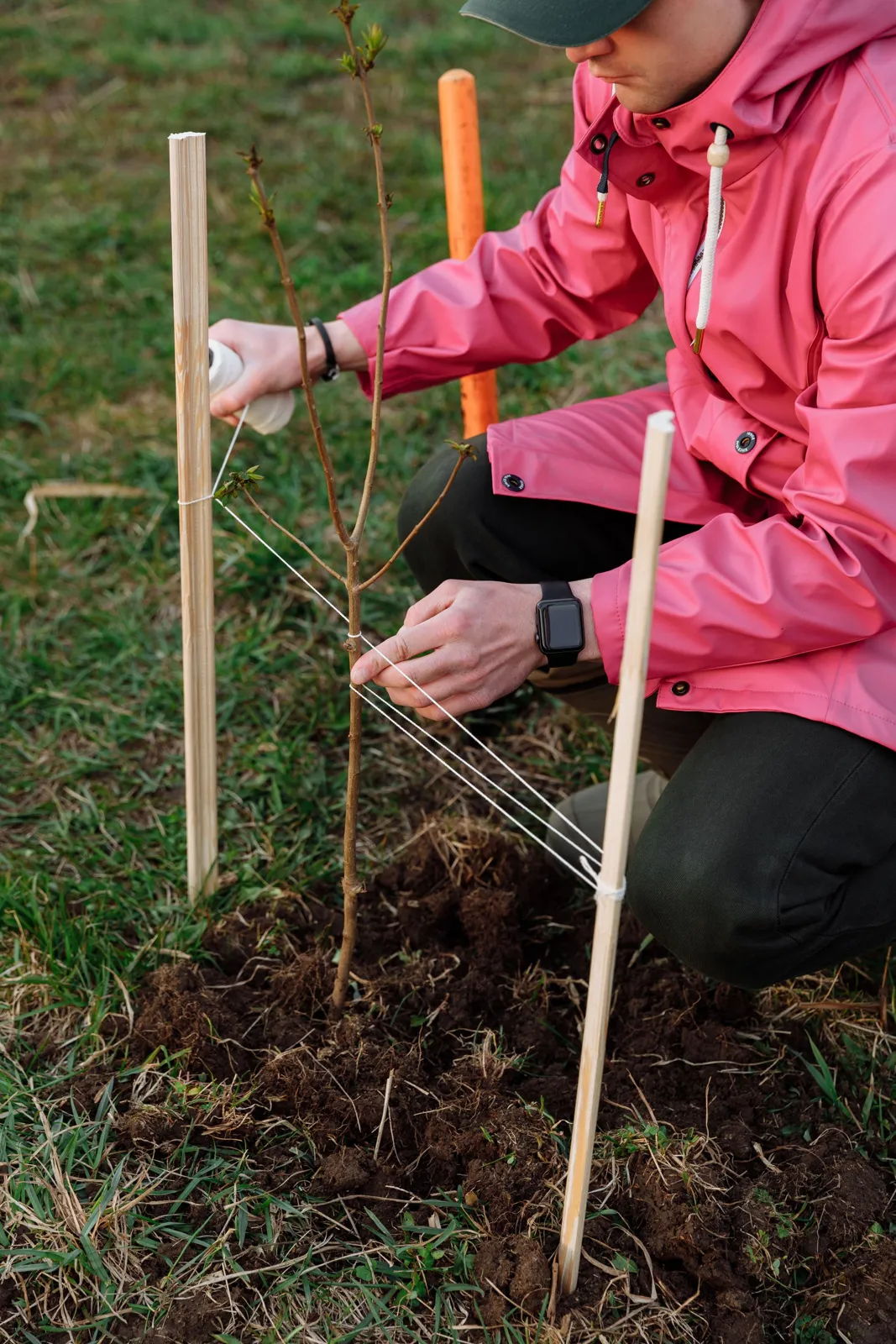
Keep watching yourself: is there violence against yourself? Start small — virtue, the five precepts, meditation — and learn to catch the subtle pleasant feeling. There are coarse pleasant feelings — sensual pleasures. Middle ones — music, art. And subtle ones: when you do something good and feel a quiet delight.
When this compass starts working, a feeling appears: I can't not do this. Not because I must sacrifice myself, but because it's good. The Gospel says: out of the abundance of the heart the mouth speaks. Deeds are the same.
Small steps — in short
- Notice dislike and indifference in your thoughts.
- Answer them: “this person is a product of their environment”, “I see dosa”.
- In pauses — on the bus, in traffic, on a walk — repeat “may everyone be happy”.
- Look for the beliefs beneath the thoughts and write in counter-beliefs.
- Acknowledge your tiredness of people and give yourself rest.
- Watch yourself with friendliness, not like a prosecutor.
- Keep a journal: where and why anger arises.
- Do good out of joy, not by force.
- Sit for loving-kindness meditation when you have time.
What loving-kindness meditation looks like in daily life: examples
Loving-kindness meditation isn't only a phrase on the cushion. Here's where it comes in handy every day.
- A cashier is rude at the end of a shift
- You could answer in kind. Or you can see a person who's been on their feet for twelve hours and say «thank you, have a good evening». Not even for their sake — for yours.
- A neighbor drilling on Saturday morning
- Irritation arrives first. That's where loving-kindness meditation pays off: noticing it and remembering: they're most likely putting up a shelf, not waging war on you personally.
- A mistake in a report
- The inner voice is already yelling: «How can you be such an idiot!» Loving-kindness meditation turned toward yourself is saying what you'd say to a friend: we'll fix it, it happens.
- A coworker who annoys everyone
- You don't have to love them. It's enough not to store up ill will and not discuss them at every lunch.
- A teenager slams the door
- You want to slam one back. Or you can breathe out and knock an hour later with a cup of tea. Kindness here isn't giving in; it's leaving the war.
- And this isn't metta
- Smiling and putting up with it while boiling inside. That's suppression: the ill will hasn't gone anywhere, it's just moved inward.
Check yourself
Is this metta or not?
You smile at a rude neighbour while boiling inside.
You notice irritation at a coworker and tell yourself: «I see dosa.»
You skip a noisy party because you have no energy for people today.
You help people through gritted teeth because «you must serve».
Instead of a conclusion
Morning, traffic. The SUV cuts in again, no turn signal.
May everyone be happy. Him too. Especially him.
A question to reflect on
Can you wish well to someone you've decided to stop seeing? Is metta about your relationships with people or about what goes on inside you? For a week, try a short loving-kindness meditation before sleep: recall one person who irritated you that day and silently wish them happiness.
Frequently asked questions
What is metta in simple words?+
Metta is kindness, brotherly love, the first of the four brahmaviharas. At its root it isn't a feeling you squeeze out of yourself but an action: thoughts, words and deeds opposite to dislike. In the suttas the basic form of the practice is called adosa — non-hatred.
How does loving-kindness meditation work?+
Sit and silently repeat “may everyone be happy”, then pause and notice how your mind and body respond. Repeat calmly and attentively. Gradually there's a sense that kindness fills you and spreads around you. No need to imagine it on purpose.
How do you practise metta in daily life?+
Notice hostile thoughts, answer them with another thought (“this person is a product of their environment”), repeat “may everyone be happy” in pauses, look for deep beliefs like “the world is hostile” and write in counter-beliefs. And be kinder to yourself: dislike of the world often grows out of dislike of yourself.
What if irritation with people is just tiredness?+
Acknowledge it: sensitive people's social battery runs down faster, and that's not a flaw. Give yourself rest, calmly turn down unnecessary events. At a deeper level, learn in meditation to see and switch off the automatic describing of the world that actually tires you.
Do you have to “serve” others by force for the sake of metta?+
No. Metta begins with kindness to yourself, and violence against yourself leads to anger. The Buddha considered good done at the heart's call, out of joy, the highest. The main question: is it a joy for you or a burden.
MYZA App
MYZA is a meditation app: a timer with gongs, a practice journal, short courses on meditation and Buddhism, and a guide who helps you make sense of your practice.

Was this article helpful?
New articles by e-mail
One letter with a new article every few weeks. No ads; unsubscribe in one click.
Read also
 Read or listen
Oct 21, 2026·11 min read·Audio
How to Stay Calm: Four Simple Phrases for Every Day
How to stay calm in everyday life: four short Buddhist phrases to keep at hand, letting go of over-control, and practice in meditation.

Oct 21, 2026·15 min read
Upekkha: How to Stop Dancing on Strings Without Going Cold
Equanimity, the fourth brahmavihara, in plain words: how upekkha differs from indifference, where emotional traps come from and why it's the hardest.
 Read or listen
Oct 20, 2026·8 min read·Audio
Mudita: Sympathetic Joy You Can Give
Mudita in plain words: not just being glad at others' success, but actions that multiply clean joy in others — and how to practise sympathetic joy.