How to meditate: listen to yourself, not someone else's method
How to meditate: why listening to yourself matters most, where to start from zero, what to do with intrusive thoughts, and which posture to sit in.
MYZA Team · 14 min read
Upd. 10/28/2026Updated Oct 28, 2026

Key takeaways
How to meditate? In a way that leaves you calmer, clearer and lighter afterwards. The key is learning to hear your inner voice and asking before each session what will bring gladness now, rather than forcing yourself through someone else's "only right" method. Start with the body: the whole body at once, a sweep from bottom to top, or in-breath — the whole body, out-breath — the whole body. Better skip one-point concentration. Distracted? Notice, relax, come back. Any comfortable posture works, even an armchair. Progress shows in being wiser a year on.
For six months someone sits on the sofa every evening, closes their eyes, and feels good: quiet, warm, calm. Then they read a forum and learn they're doing it wrong. So how to meditate — and who gets to decide?
The short answer: the right way is whatever leaves you calmer and clearer afterwards. Here's how to find that way, step by step.
How to find your own path in meditation
The main thing is to learn to listen to yourself. Including your body: how it responds to this activity, that event, this thought.
When you listen, you see that some activities and thoughts bring wholesome states and others bring heavy ones. What's left is simple: pick what brings gladness and grow it in your life. Let the unwholesome go.
Here's what often happens. Someone meditates the way they enjoy: it brings stillness, calm, joy. They sit and feel good. Then they think: "I'm probably doing it wrong — I don't have a teacher." So they go to a teacher, sometimes a monk. And the teacher says: "That's fine, but this method doesn't lead anywhere. Not to enlightenment. Here's the right way."
And the person stops listening to their own inner voice and starts listening to someone else's. That inevitably leads to a dead end. Instead of gladness, practice turns into a quest, a job, tension, stress. And in the end the person breaks.
Same with life as a whole. We were taught not to listen to ourselves but to do what's expected. And we simply end up unhappy.
The inner voice is the Dhamma itself
It goes deeper than "just listen to yourself". There's a certain wholesome ground of being. You can call it the Dhamma — with a capital D, in the transcendent sense. Not letters or text: texts only try to express it and lead us to it. It's what the Buddha's words came from, the source of awakening itself.
This Dhamma sounds in us all the time. The voice we learn to hear is what "listening to yourself" means. In fact it's listening to the Dhamma. And it's the Dhamma we take as our teacher, not some person.
Sometimes a person feels that voice clearly and follows it for a while, but doesn't trust themselves. And sure enough, another sage appears. A shaved head and an orange robe work especially like magic: it seems such a person can't be wrong and everyone must do as they say. That's a big mistake. The person keeps running into a concrete wall — lucky if they don't split their head open.
«The hard part isn't finding something that absorbs you. It's learning to hear that voice and trust it»
So each time you sit down to meditate, ask yourself: what do I need right now? What will bring gladness and calm? What can I give myself? You could call it free-search meditation — really, a free search for the Dhamma.
Before he passed, the Buddha said that after him the Dhamma and the would be the teacher. It seems he largely meant this Dhamma too. And the Vinaya is discipline — reasonable and needed. Discipline and trust are two wings you can't do without, in life or on the path. Trust in this very inner voice.
The same goes for people. If being with someone feels heavy, trust yourself: don't spend time with them, or keep it to a minimum. At least you'll get a pause to understand what's wrong.
Can you trust yourself if your mind isn't clear?
You can, and the test is very simple. If someone thinks they're trusting themselves but ends up with heavy states and heavy events, they're feeding their traumas and delusions. If your life gets healthier and you start seeing the thinking errors that led you into heaviness, you're on the right track.
Say someone feels heavy after meetings with a certain teacher. It's worth looking at which thoughts led there. Often it turns out to be: "Someone knows my mind better than I do." Self-doubt. All their life they got their knuckles rapped: "Who are you to decide for yourself? I know better."
The Buddha spoke about this too. Most vividly in the . He didn't tell the Kalamas, "My teaching is the best, accept it." He said: rely on your sound mind; watch what in your actions, thoughts and words leads to suffering, yours and others', and what reduces it. Learn that way. That's what the Dhamma is.
And sometimes a newcomer at their very first meeting gets a lecture on charts of aggregates and other complexities. They have no idea where they've landed, and they're told: "This is the Dhamma, you have to study." Yet the Dhamma is about what brings you benefit, joy, calm, a healthy state. That's what's worth talking about, appealing to common sense. It can be explained to almost anyone.
Buried treasure or a mountain trail
The most common approach to meditation, and to much else, goes like this. You're told: there's treasure buried under this spot. Dig right here, don't move, until you hit the chest. Until you do, you're just shifting dirt in the sweat of your brow and getting nothing. The point: to reach liberation, you have to toil and suffer.
In one sutta the Buddha argues against exactly this attitude among the . They believed you have to torment yourself to burn off bad karma, and then liberation comes. The Buddha disagreed.
And is there any treasure at all? Maybe there's a rock under the shovel, and you'll be chipping at it for years. You're asked to believe the chest is down there somewhere. When you're promised something in the future and told to suffer now, that's a very bad sign. It's blind faith, and taken far enough it makes a person a fanatic.
Meditation is more like crossing a mountain trail. What you need there isn't stubbornness but sensitivity. Which way is the wind blowing? Are clouds gathering? Is there shelter nearby? And above all: am I comfortable walking here? Should I take the lower path? Are my boots right for rock? Might I get there faster round through the valley than straight over the pass?
That sensitivity and flexibility is the question "what will bring me gladness in meditation right now?"
With this approach, enjoyment of meditation comes right away. Maybe not deep at first, without the full palette yet. But from the very first steps you feel that meditation is good, pleasant, calming at least a little.

"Nothing works for me"
Sometimes a person shows up in despair: meditation just isn't happening. It turns out that to them meditation means concentrating on an object, and even keeping attention on the body fails — attention drifts, and they can't catch the moment a stray thought arrives. Concentrating on the tip of the nose, as some schools teach (it's not in the Buddha's teaching), is a total disaster. But it turns out that simply relaxing, half-reclined, suits them. They almost fall asleep, but the sleep is light: they catch that moment, sit up a little — and the mind becomes very calm, clear, awake. The body is barely felt; vivid images float up at the edge of sleep, even lucid dreams in which they watch the nature of the images, and then comes wakefulness with no images at all.
All this came very quickly, and these are deep things. It turned out they'd relaxed this way since childhood and had been seeing those images for years. So much for someone who "couldn't meditate".
How to meditate if you're starting from zero?
Before a session, ask yourself: how can I spend this time, including in what posture, so that afterwards I feel not tired but rested, calm and clear? It may not click right away; that's a matter of experience. Gradually you'll learn to hear the inner voice.
Practice has two sides: calming the mind and wakefulness. Sometimes even deep relaxation, almost to the point of sleep, leads to wakefulness, as in the story above. Any method that leads to these two is good.
The default base is the body. If you're starting from zero, it's best to work from awareness of the body. However suits you:
- 1
The whole body at once
Hold attention on the body as a shape, all of it, as if feeling an entire statue.
- 2
A sweep through the body
Move attention through the body from bottom to top at your own pace.
- 3
With the breath
In-breath — the whole body; out-breath — the whole body.
Better not to concentrate on a single point. One-point concentration trains you to push everything else out of attention. Psychologically that's questionable: you learn to push out things that shouldn't be pushed out, such as unwholesome states. You stop noticing them. In meditation there's only the proverbial tip of the nose, and nothing else. Why hard concentration hurts so many people is covered in Can meditation be harmful?
Our task is the opposite: learn to notice everything. The way a hiker on a mountain trail notices every change in the weather. Notice how unwholesome states arise and how they fade. That is wisdom, and that's how it accumulates.
Try it right now
A minute with the body
- Sit or lie down however feels comfortable right now.
- Feel the whole body, as one shape.
- In-breath — the whole body. Out-breath — the whole body.
- Distracted? "Okay, seen it", relax, come back to the body.
Wisdom without fireworks
It may be that you never get any wonderful states, lucid dreams and the like. You simply sit and spend some time with the body, with the breath. It's calming and pleasant. And over time it leads to wisdom too.
You sit and see how the mind works, how thoughts arise. Then you start noticing the tiniest seeds of thoughts — in Orthodox Christian asceticism they're called "suggestions". You don't even need to let them go: notice them and they vanish on their own. That's the wisdom the Buddha spoke of, .
It leads to awakening too. The suttas have the term "liberated by wisdom" — an arahant with no supernormal powers at all (those belong to other routes, through special states like lucid dreams). But this person is wise, understands how suffering is born and how it ends, and has a clear mind. That's what's needed. Supernormal powers aren't needed for the Dhamma or for happiness.
Progress is easy to gauge. Look back at yourself a year ago. After a year of practice you'll see you've grown wiser and understand more about your mind and how suffering is born. So when it comes to how to meditate, follow the inner voice rather than chasing special states.
What to do with intrusive thoughts
If it feels good and calm simply to sit and watch the breath, do that. A distraction comes — "okay, seen it, relax, back to the body".
Relaxing matters: stray thoughts are usually tied to subtle tension. When you come back to the body you'll see it — let it go, unclench, and stay with the body. Something pops up again — come back again. No need to concentrate. Let thoughts come one after another; with the edge of your attention you keep an eye on the body. That's enough. Gradually the stream of thoughts dies down.
An interesting detail: sometimes you sit down to meditate with cold hands and feet. Most likely the mind is active, the sympathetic nervous system is running, the body hasn't slowed down yet. As you calm down, your hands and feet warm up: the parasympathetic system has kicked in. That is the mind calming. Mind and body aren't separate: when one settles, so does the other.
Anxiety works the same way. You sit, keeping an eye on the body, and the mind keeps sticking to one topic. Each time you notice it and briefly, almost in one impulse, tell yourself: "Not interesting, we're not thinking about this now."
The mind is like a three-year-old on a walk, bringing you every stick and pine cone they find. If you don't gush over them but calmly say "mm, not interesting", after a few times they stop bringing them. Same here: notice — not interesting — back to the body. Again, and again. By the tenth, the twentieth time, the mind stops returning to the topic and settles.
And you'll see the topic has lost its edge. You might even be surprised it was ever so gripping. That's how you see suffering being born and ending. These are grains of wisdom, piling up.
What posture to meditate in
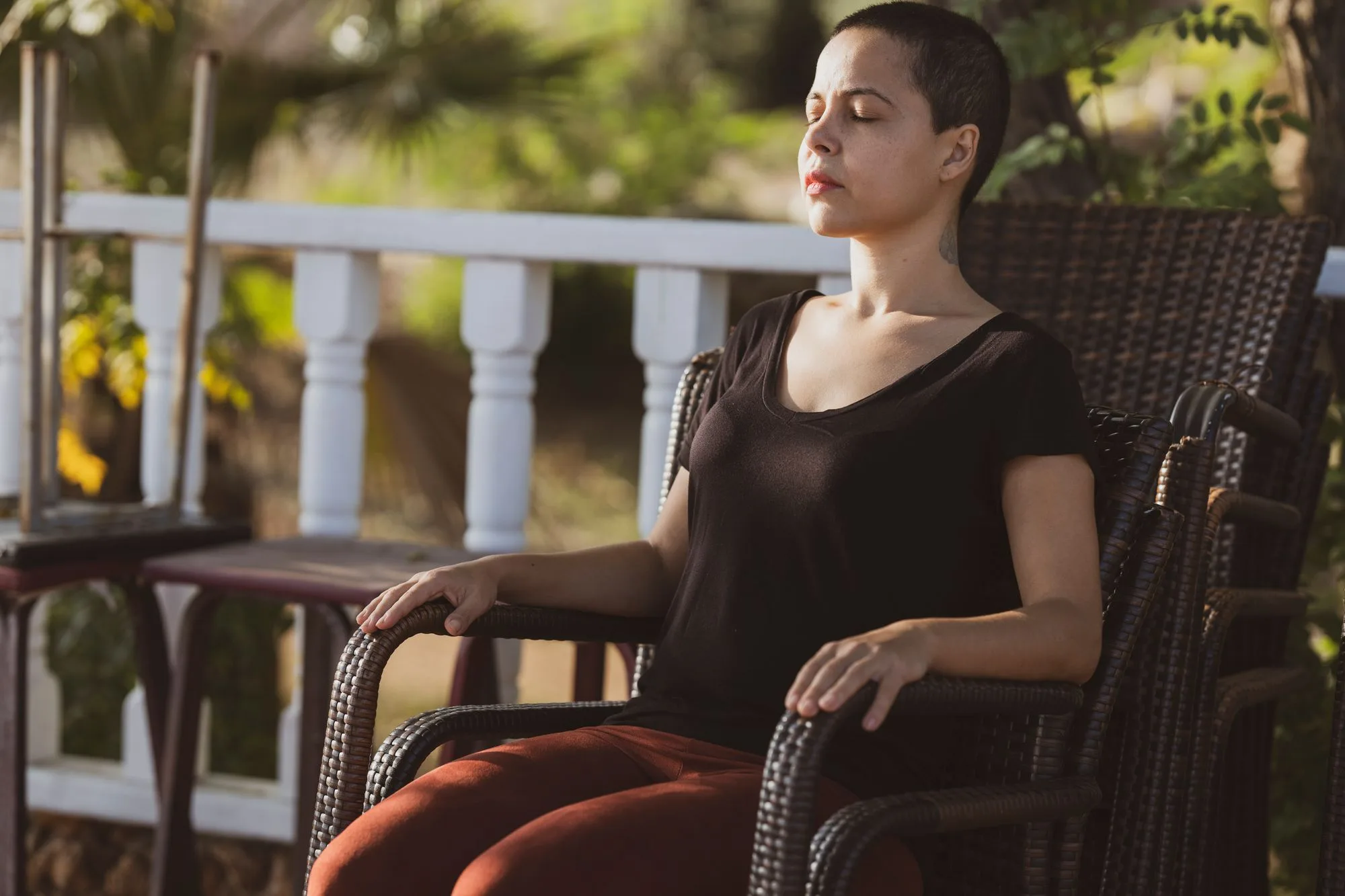
How to meditate comfortably? Ask yourself what would feel pleasant right now. Maybe try a different posture from your usual one. Maybe an armchair, half-reclined.
Don't model yourself on ancient Indian ascetics sitting in lotus on a mat. That's not even an established fact: the suttas say nothing of the kind. Most likely they often sat with at least some back support and folded their legs however they liked — that's literally how the suttas put it. All the song and dance around the lotus came later. More in the article on meditation posture.
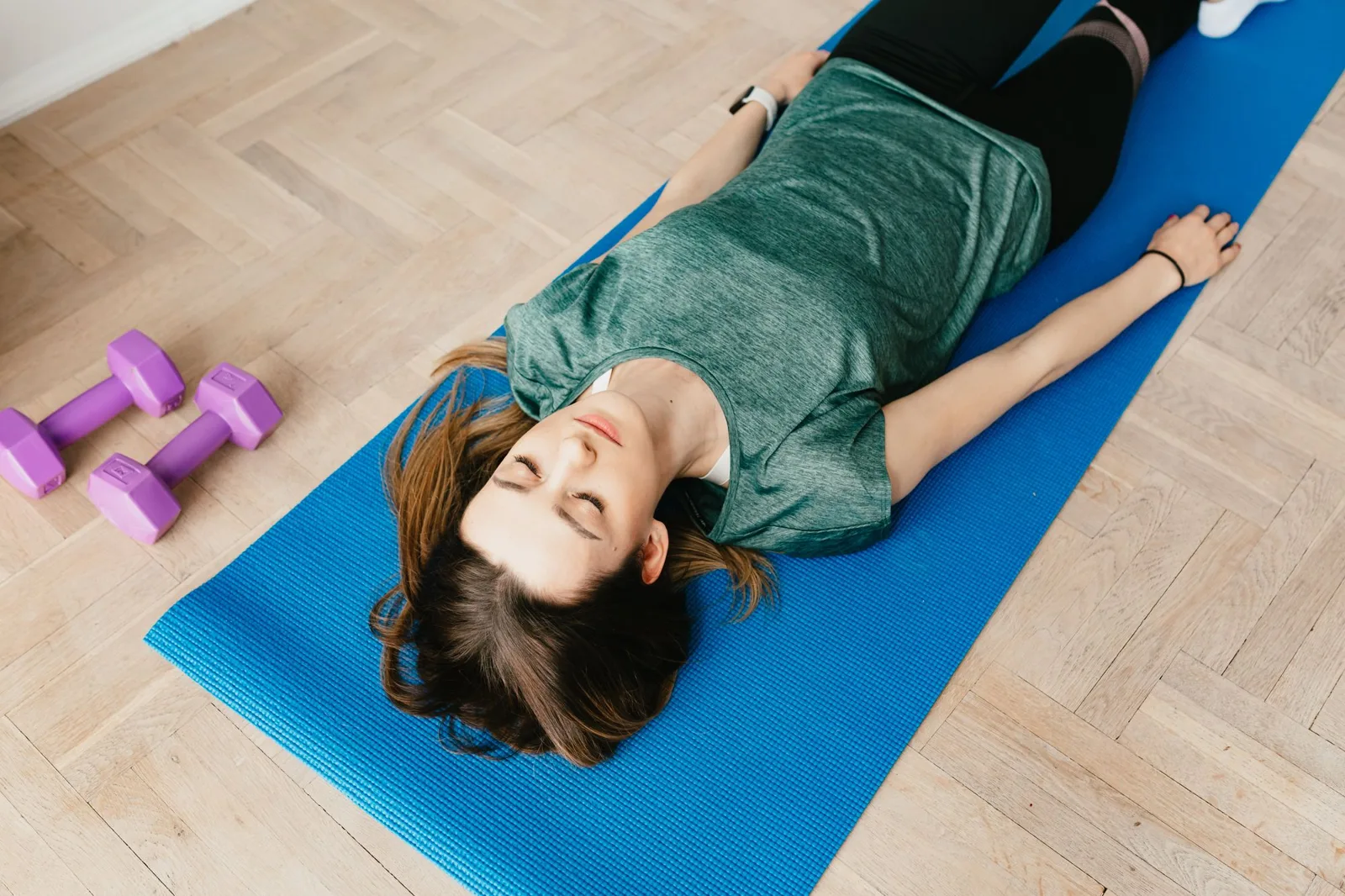
Some people practise lying down perfectly well. Just make it a different position from the one you sleep in.
The thirty-one parts of the body
People often begin by listing the thirty-one parts of the body. It's usually read as a contemplation of repulsiveness, but in the suttas that's far from clear, especially compared with the . In satipatthana, practice begins with the body, and going through its parts calms the mind rather than producing disgust.
It's like going through lines of the on prayer beads. A whole meditation can consist of running through the thirty-one parts of the body again and again. You simply touch each one with attention: here it is. Skin, hair of the head and so on. And you return to the body.
For some people this practice brings unusually deep relaxation: they seem to relax each part, bones and organs included, and arrive at complete bodily calm. That's an option too.
How to meditate your own way in daily life: examples
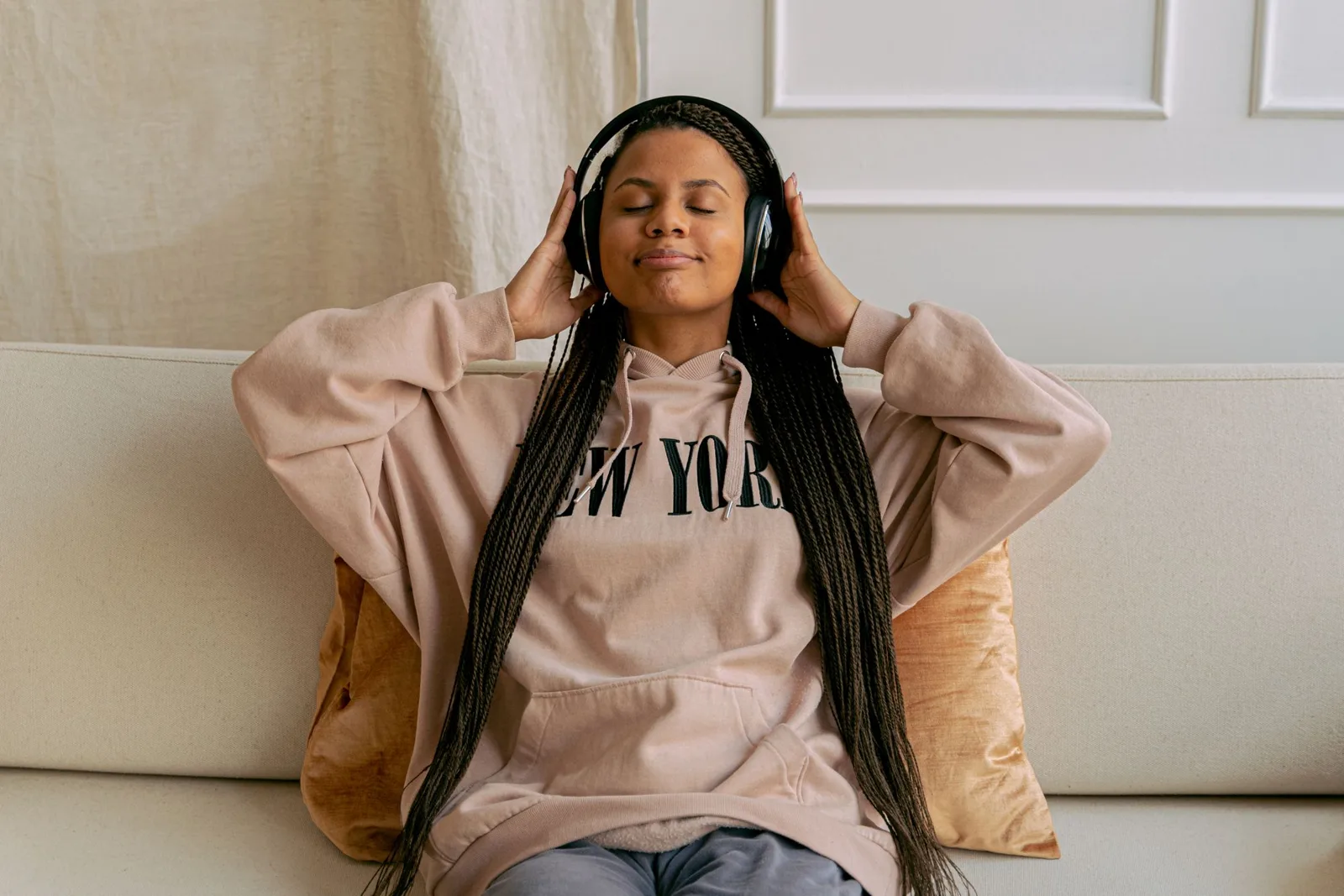
Listening to yourself is a skill you need off the cushion too.
- Too drained after work to sit up straight
- Instead of forcing your back upright, try an armchair, half-reclined. Twenty minutes later there's clarity instead of irritation.
- A friend recommends the "real" method
- You try it for a week and it gets heavy. That's no reason to blame yourself — it's a signal to return to what brings gladness.
- A quarrel keeps replaying all evening
- "Not interesting" — back to the body. By the fifteenth time the mind drops that stick on its own.
- Half an hour of sitting and "nothing happens"
- No images, no epiphanies — but six months on you snap at your family less. That's wisdom without fireworks.
- A meeting that leaves you heavy
- Trust yourself: cut back on contact and look at what exactly felt wrong.
- And this is no longer listening to yourself
- Quitting practice at the first twinge of boredom because "I don't feel like it". The inner voice is about gladness and clarity, not momentary laziness.
Check yourself
Your own path or not?
You meditate half-reclined in an armchair and come out calmer and clearer.
A teacher said your way "leads nowhere", so you forced yourself onto their method.
You focus only on the tip of your nose and try to notice nothing else.
After a year of practice you understand better how irritation arises in you.
Instead of a conclusion
How to meditate? The way a careful hiker walks a mountain trail: watching the sky, the path, and themselves.
Not digging blindly for promised treasure. But asking each time: what will bring me clarity and calm right now?
The answer is already sounding inside. You only need to hear it.
A question to reflect on
Whose voice do you hear when you doubt your practice — your own, or someone else's? For a week, before each meditation ask yourself "what do I need right now?" and note down what came up and how you felt afterwards.
Frequently asked questions
How to meditate as a beginner?+
Start with the body: keep attention on the whole body at once, sweep through it from bottom to top, or link it with the breath — in-breath, the whole body; out-breath, the whole body. Sit however is comfortable, even half-reclined in an armchair. Distracted? Notice, relax, come back to the body. The test is simple: afterwards you feel calmer, clearer and more rested.
Should I concentrate on one point, like the tip of my nose?+
Better not. One-point concentration trains you to push everything else out of attention, unwholesome states included, so you stop noticing them. The task is the opposite: notice everything, how states of mind arise and fade. Concentrating on the tip of the nose isn't in the suttas.
Can I meditate without a teacher?+
Yes. What matters more is learning to hear your inner voice and judging practice by its fruits: does it bring joy, calm and clarity, is your life getting healthier? In the Kalama Sutta the Buddha advised relying on your own sound mind and testing teachings for yourself. A teacher who says "your way leads nowhere" and turns practice into stress is more likely to do harm.
What if intrusive thoughts keep coming during meditation?+
Don't fight. Each time, notice the topic, tell yourself briefly "not interesting, not now", release the tension and come back to the body. The mind is like a toddler bringing you finds: if you don't make a fuss, after ten or twenty times it stops returning to the topic, and the topic loses its edge.
Can I meditate lying down or in an armchair?+
Yes. The suttas don't require sitting in lotus: ancient ascetics most likely often sat with back support and folded their legs however they liked. Any posture that leaves you rested and clear will do. If you meditate lying down, use a different position from the one you sleep in.
How do I know meditation is working?+
Look back at yourself a year ago. If you've grown wiser, understand your mind and how suffering arises and ends, and snap less often, the practice is working. You don't need special states or visions for that.
MYZA App
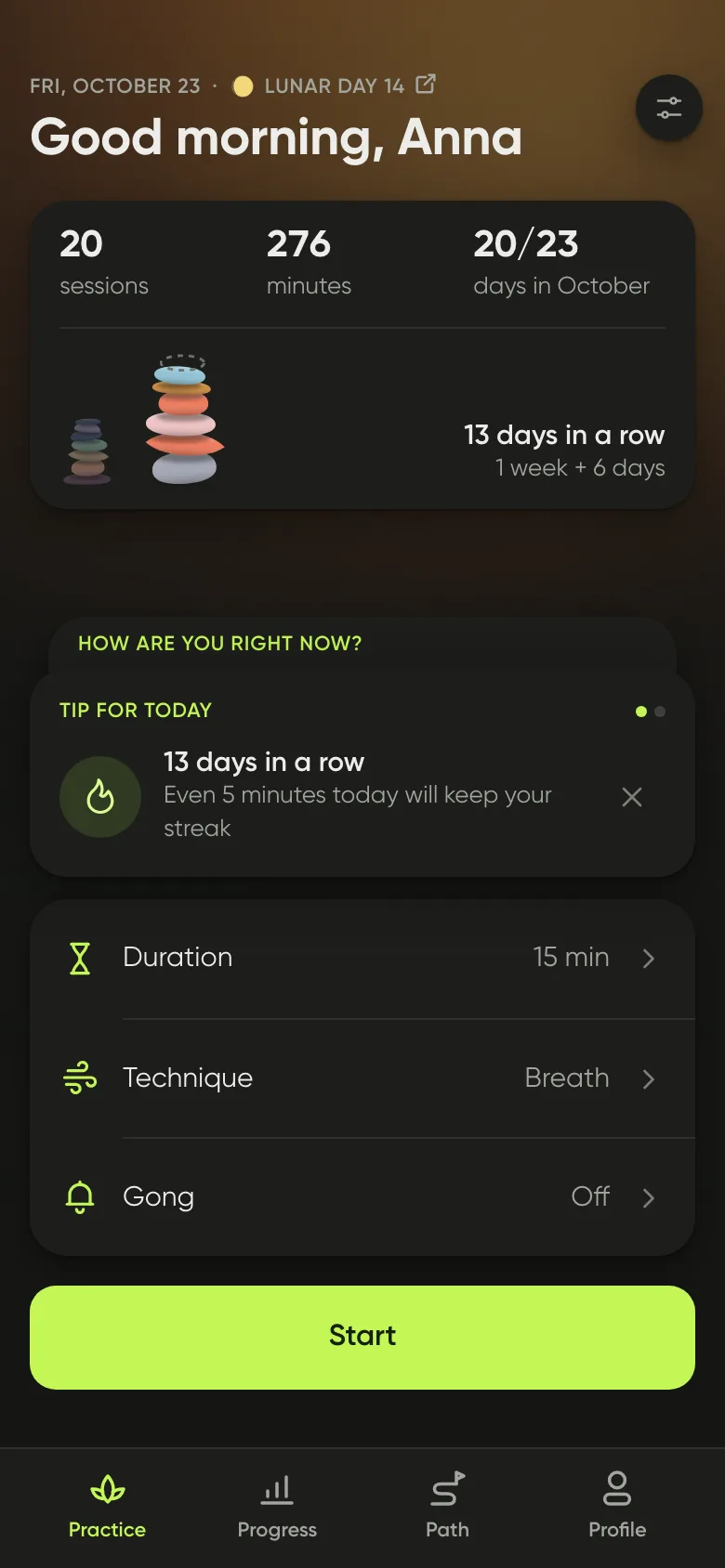
MYZA is a meditation app: a timer with gongs, a practice journal, short courses on meditation and Buddhism, and a guide who helps you make sense of your practice.
Was this article helpful?
New articles by e-mail
One letter with a new article every few weeks. No ads; unsubscribe in one click.
Read also
Oct 17, 2026·12 min read
Meditation Posture: Comfortable, Not Correct
Your meditation posture doesn't have to be classic. Why knees and back hurt, what the Buddha said about posture, and how to find one that suits you.
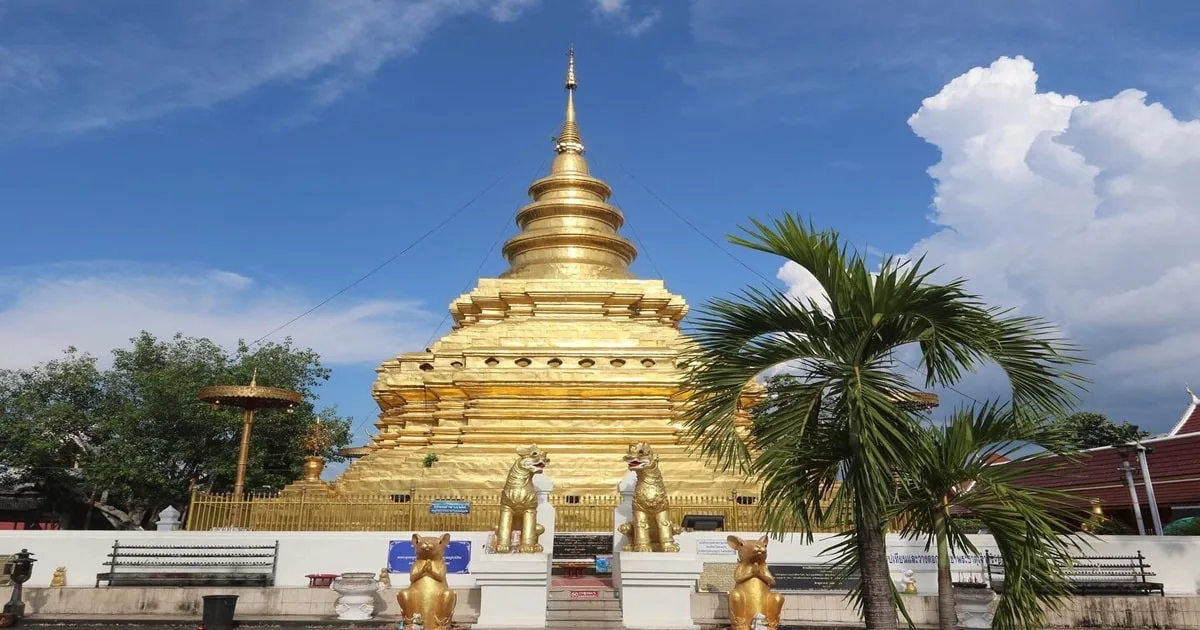
Oct 16, 2026·11 min read
Meditation Retreat in Thailand: Seven Days of Silence
A meditation retreat in Thailand from the inside: the monastery centre, the rules, the food, working with doubt and the insights of 7 silent days.
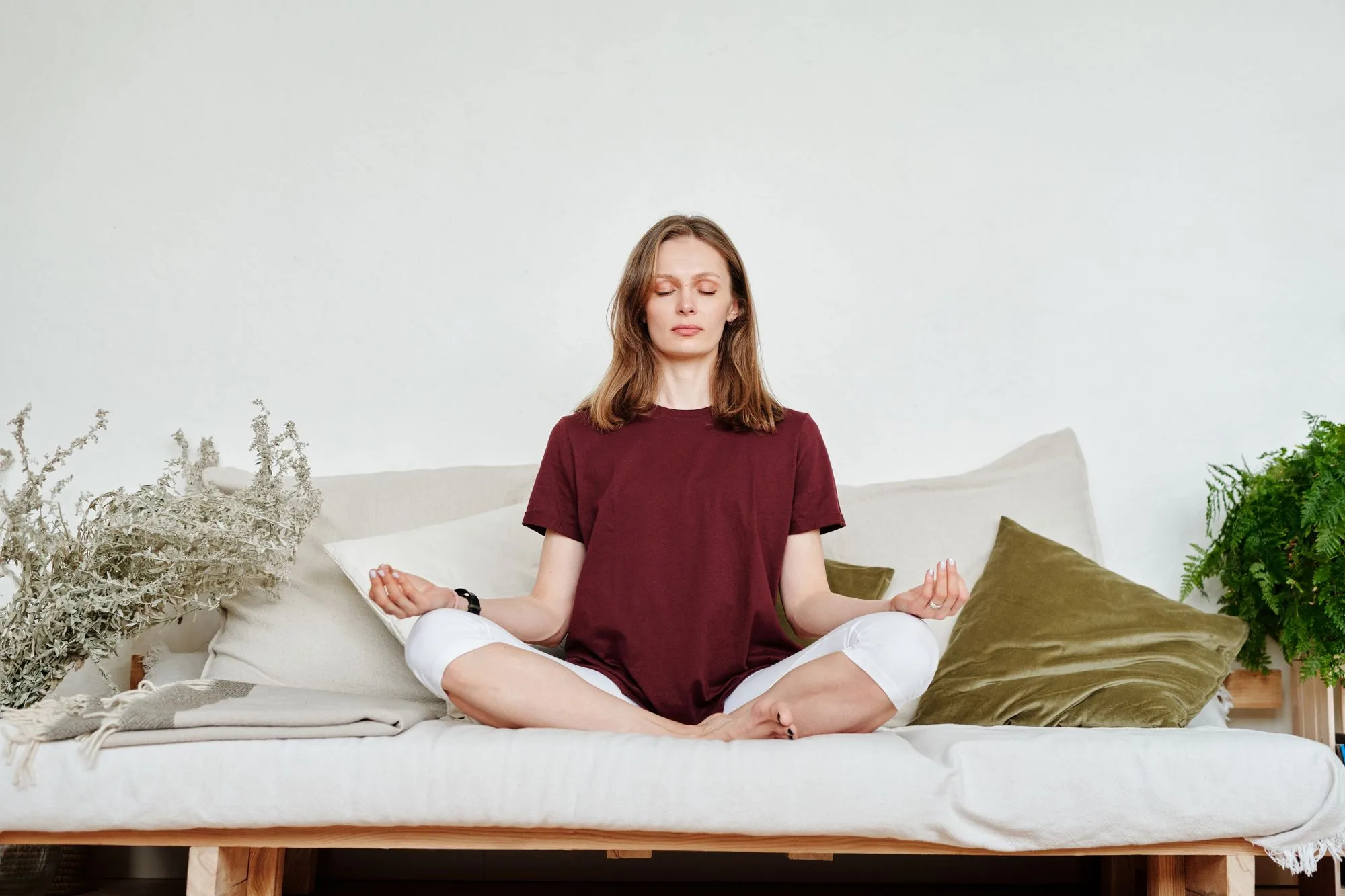 Read or listen
Oct 17, 2026·15 min read·Audio
What Is Vipassana: In Plain Words and in the Suttas
What is vipassana in the suttas? Not a separate technique or a 10-day course, but silent looking into impermanence and suffering once the mind has settled.