What Is Vipassana: In Plain Words and in the Suttas
What is vipassana in the suttas? Not a separate technique or a 10-day course, but silent looking into impermanence and suffering once the mind has settled.
MYZA Team
Published October 17, 2026

Key takeaways
What is vipassana if you read the suttas rather than later commentaries? Not a separate technique or a ten-day course, but silent looking into aspects of reality — impermanence, suffering, the five aggregates — once the mind has calmed down. The Buddha describes the path through ethics, guarding the senses, wakefulness, seven wholesome qualities and the jhanas, and vipassana is dissolved in those qualities: in studying the Dhamma, energy, remembering the Teaching and wisdom. In practice it's two things: meditating to calm the mind, and studying the Teaching. The breakthrough happens by itself when the two meet.
A friend's post: mountains, a blanket, a mug of tea and the caption “10 days of vipassana. Handed in my phone. Survived.”
These days the word “vipassana” turns up in ads somewhere between a yoga tour and a detox programme. It's printed on banners, courses are built around it, retreats are named after it.
So what is vipassana, really? And what did the Buddha himself say about it?
Ask the suttas, the ancient records of the Buddha's talks, “what is vipassana?”, and you find something odd: vipassana as a separate technique is hardly there. No ten-day schedule, no body-scanning routine. But there is something more interesting.
What is vipassana today
Over the last few centuries vipassana has become a rather tangled practice. Mostly thanks to the commentarial tradition — interpretations that grew up around the Buddha's words many centuries after him.
Today there are two big approaches.
The first is total mindfulness. Constant, unbroken observation of everything that happens — a step, a breath, an itch, a thought — is what gets called vipassana practice. That's how the Mahasi Sayadaw tradition teaches it, and, in its own rather clever way, Goenka's. By and large, the whole modern mindfulness movement grew out of this too.
The second is through special states. First you reach a pure, clear mind in meditation, the so-called jhanas. Then, following instructions from the commentaries, you begin to “look into” reality: to take apart the finest mechanisms of perception from the angle of the Abhidhamma. This version came to us mainly through the Pa Auk Sayadaw tradition.
Both look impressive: manuals, stages, diagrams. Like a forty-page manual for an electric kettle. The kettle, meanwhile, still just boils water.
Now let's see how it's described by the Buddha himself.
Where is vipassana in the suttas?
When the Buddha or his disciples describe the practice, it very often ends with the jhanas — states of deep concentration and calm. There's no separate vipassana after them.
So where is it?
A good example is the Sekha Sutta, sutta 53 of the Majjhima Nikaya. In it, Venerable Ananda, in the Buddha's presence, explains how disciples who have already entered one of the stages of awakening should practise. In essence it's the same practice as for everyone else.
The noble disciple does six things.
- 1
Perfects virtue
Keeps to good conduct, lives with restraint, follows the precepts, having taken on the rules of the path.
- 2
Guards the senses
They see, hear, taste, feel sensations in the body, think thoughts — and take care not to let attention linger on those features of what's perceived that stir up attraction or aversion.
- 3
Is moderate in eating
Eats not for fun, not for pleasure and not to make the body attractive, but to live and practise. With the thought: I'll end the discomfort of hunger and not create new discomfort from overeating.
- 4
Stays wakeful
By day sits and walks, clearing the mind of unwholesome states. The same in the first third of the night. In the second third lies down in the lion's posture — on the right side, one foot on the other, mindful, having set a time to get up. In the last third sits or practises walking again.
- 5
Cultivates seven wholesome qualities
More on them below: this is exactly where vipassana is hidden.
- 6
Attains the four jhanas
At will, without difficulty.
That's the whole path. The four jhanas — and true knowledge comes from all of this. Calming the mind, samadhi, is by and large the process of reaching the jhanas.
So where is vipassana here?
Seven qualities where it hides
Look closely at the fifth point. Here are the seven qualities:
- Faith
- Confidence that the Tathagata truly reached perfection in knowledge and conduct, that he is the teacher of gods and humans, the Awakened One.
- Conscience
- Doesn't allow the unwholesome — in body, speech or mind.
- Fear of wrongdoing
- The disciple is afraid of staining themselves with unwholesome deeds, words or thoughts.
- Inquisitiveness
- They learn a lot: memorise the Teaching, recite it aloud, reflect on it, penetrate its meaning. They take it in eagerly.
- Energy
- Persistently abandons unwholesome states and cultivates wholesome ones.
- Mindfulness
- This is sati — what's usually translated as “mindfulness”. And look how it's described here: the disciple remembers the Teaching, even if they heard it long ago, and remembers that it has to be applied.
- Wisdom
- Understanding how things arise and pass away.
This is where vipassana is buried.
Inquisitiveness is its precondition: a person studies the Dhamma and keeps it in mind.
Energy — letting go of the unwholesome and cultivating the wholesome — is also a kind of looking. As you do this work, you start to see how the mind's defilements work and how samsara, the cycle of rebirth, works.
Mindfulness here isn't “total awareness of every step” but remembering the Teaching and remembering to apply it.
Wisdom is understanding how everything arises and passes away.
Qualities four to seven are, in essence, the full version of vipassana.
In the suttas, vipassana is like salt in soup. It isn't served as a separate dish, but without it the soup isn't right. It's already dissolved in the whole meal.
«Vipassana isn't a separate technique. It's dissolved in how a person lives with the Teaching.»
In practice it comes down to two things. Meditating, learning to calm the mind while keeping it clear. And studying the Dhamma.
It's like a tunnel dug from both sides of a mountain. Each crew works on its own end, and one day they meet in the middle. Exactly when, no one can say in advance. There's no technology of awakening. But you can create the conditions for it.
Ethics goes without saying. As for inner work:
- study the Dhamma;
- uproot unwholesome states and cultivate wholesome ones;
- look into how all of this works;
- meditate — cultivate calm and alertness of mind.
That's it. That's what vipassana is when you look at the path as a whole.
In the suttas it's all much simpler than in later traditions. Especially in the commentarial tradition of Theravada: a lot there is overcomplicated, and people end up confused.
The methods taught at retreats can be useful: people come back calmer, and that's wonderful. But in the form they're taught, they aren't in the suttas. They're later developments, not what the Buddha was talking about.

What is vipassana, in short?
If you do want a definition, vipassana is philosophical looking into certain aspects of life.
Looking, not thinking. Thinking for us is usually verbal and logical: there's A, there's B, so C. This is something else. Silent looking.
For example, into what suffering is. Or into the five aggregates — the five “building blocks” that, according to the Teaching, make up our experience. Not in theory, but live:
- here is the body;
- here are feelings, pleasant and unpleasant;
- here is recognition at work;
- here impulses of will arise;
- here consciousness arises.
You observe this, and little by little experience builds up: how all of it arises and how it works. That's what looking means.
Looking, not forcing
Sometimes “looking from the angle of the Teaching” is understood as bending your perception to fit the Teaching. The Teaching says “everything is suffering” — and a person starts dutifully seeing suffering in everything.
It's a bit like repeating “I am calm, I am calm” while stuck in traffic, late for a flight. The words say one thing, and inside it's something else entirely.
First, not everything is suffering, if it comes to that.
Second, take anicca — impermanence. Looking into anicca doesn't mean repeating “everything is impermanent, everything is impermanent”. You don't program your perception. You simply look in that direction: what are things like, from the point of view of impermanence?
Your nose itches. The itch is there, it grows, it shifts — and then it's gone.
Someone was rude to you in the coffee queue this morning. By lunchtime, all that's left of the anger is the story you tell your colleagues.
Anicca. You can see it, if you look.
You can observe the five aggregates in the same way, for instance through the practice of satipatthana, the four foundations of mindfulness. Gradually wisdom builds up: how things appear, how they disappear, how this whole system works. And so how clinging works. And so suffering. At some point this leads to insight, a breakthrough in understanding.
«You don't need to convince yourself that everything is impermanent. You need to watch how impermanence works.»
How a breakthrough actually happens
There are two sides to this. One: the mind is calm and silent. Two: in that silent state, your gaze rests on whatever is in front of you.
There's no need to overcomplicate the looking. The practical task is simpler: calm the mind in meditation, and outside meditation spend some time getting to know the Teaching.
Then at some point the mind becomes calm — in meditation, and later outside it too. And suddenly a theme from the Teaching surfaces by itself.
Anicca, say. You're clearing out a cupboard and find a box of old photos. There you are in fifth grade; there's your grandmother's yard, long gone. And impermanence suddenly lands not as an idea from a book but in your whole body.
And it breaks through.
At that moment vipassana happened on its own, because the mind was already calm. Samadhi and vipassana met: a calm mind and looking.
Anything can be the trigger. There's a story in the texts about a nun, a disciple of the Buddha, who meditated for a long time without success. Then one day she was pouring water, it spilled, and watching those little streams she awakened.
Or sutta 74 of the Majjhima Nikaya, the Dighanakha Sutta. It describes the final awakening of Venerable Sariputta. The Buddha was talking with someone else, and Sariputta was simply listening. A calm mind, a theme arose, he silently looked into it — and it broke through for him too.
So meditation, calming the mind and unhurried study of the Teaching — that is the practice.

Reflecting helps. But it isn't vipassana yet
Reflecting on the Teaching is good. Working out the meaning of the terms, even in words, asking questions — this is the groundwork for vipassana.
And questions asked out loud, to a teacher or in a community, help others too. That's good karma, by the way.
But this is preparation, not vipassana itself. Vipassana is one step further.
It's looking as well, only without the inner dialogue. As if you went still — and saw.
You could say that at this moment Nibbana itself came closer. The psychophysical stream became ready to receive it, and a small push of vipassana is enough to attain one of the fruits of the path.
This is how it happens at every stage of awakening. These are big insights, and afterwards a person really does change from the inside.
How to look into dukkha
People often ask: what about dukkha, suffering? Many are used to telling themselves that everything is dukkha.
This is interesting. When the Buddha lists objects for looking into, as in the Girimananda Sutta, the usual ones are anicca and anatta, impermanence and not-self. Dukkha isn't listed as a separate point.
On the other hand, one of the routes to awakening is insight into the Four Noble Truths. And they're framed precisely through dukkha: there is suffering, there is its cause, there is its cessation — Nibbana, and there is the path to it — the Eightfold Path.
So looking into dukkha can also count as a form of vipassana.
The question is how.
Simply keeping in mind that everything is dukkha is more the groundwork than vipassana itself. Essentially it's reflection, even verbal. It points attention in the right direction. But to the ordinary, sensory mind it's not at all obvious that everything is suffering, so it turns into self-programming.
A question works better than a statement.
Not “everything is dukkha”.
But “where is the dukkha here?”
Here's the first sip of your morning coffee. Pleasant. So where is the dukkha? Maybe in the fact that the third sip isn't quite as good. Or in the slight disappointment as the cup empties. Technically you can even repeat “dukkha, dukkha”, but the point is the search. Not reasoning, but looking. You know it's here, but where? That silent questioning is vipassana.
How to spot your suitcase on the carousel
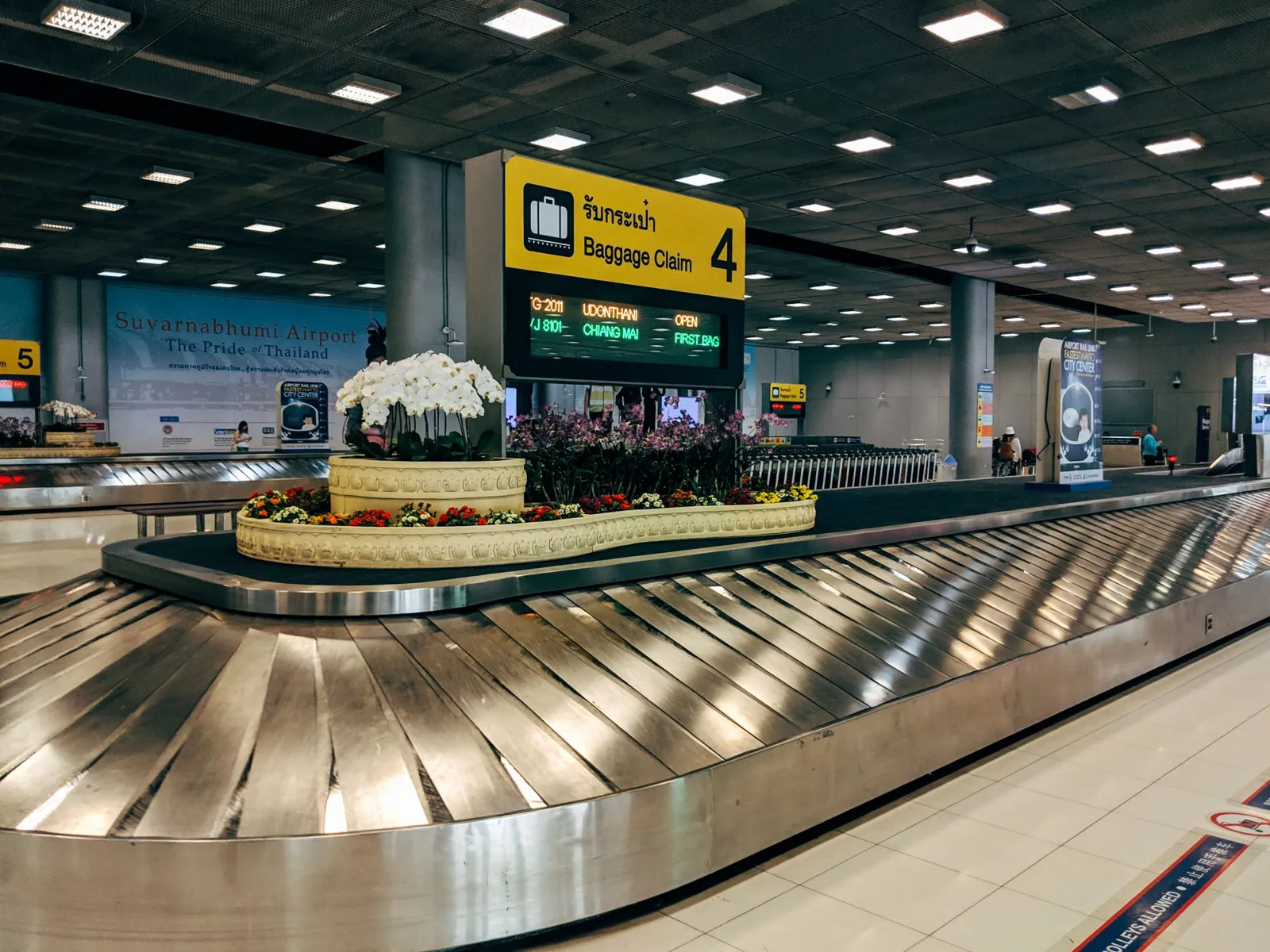
Vipassana is like waiting for your luggage at the airport. The carousel crawls along with dozens of suitcases: black, black, more black, and one pink one with stickers.
You don't need to recall where you bought your suitcase, what it cost or why one wheel squeaks. It's enough to remember what it looks like and watch the belt.
So what is vipassana here? Remembering and attentive watching.
And then comes the “eureka”: there it is. Insight into dukkha arrives the same way.
If the practice makes you feel low
- Looking into dukkha shouldn't produce dark states. It should lead to wholesome ones.
- Some people start walking around constantly keeping suffering in mind — and slide into a depressed state. Avoid that: depression is an unwholesome state.
- For others, strangely enough, looking into dukkha brings calm and even joy. It's as if you take a step back from suffering and it becomes just a phenomenon. If that's how it goes, everything's on track.
- If the practice is sinking into gloom, that's a reason to adjust it: it's heading the wrong way.
A good counterweight: when you notice dukkha, remember straight away that there is also a way out of suffering. It balances things and keeps you from sinking into gloom.
The very fact that remembering dukkha doesn't bring on depression already shows that a person senses dukkha isn't a dead end. From there it's very individual, and you have to find the keys that fit.
Which comes first: calm or looking
The Buddha describes different ways people walk the path.
- Calm first. A person mostly meditates and calms the mind, and gets to know the Teaching only in passing. Only once meditation is strong, once they've learned to calm the mind well and strengthen alertness, do they take up study of the Teaching and looking more seriously.
- Looking first. From the very start a person mostly looks, and the mind gradually calms down on its own. Through looking into some theme they most often reach the first stage of awakening, and only then go deeper into meditation. Here vipassana comes before samadhi.
- In parallel. The Teaching is studied quite intensively — reflecting, looking into particular aspects. And meditation goes quite intensively too.
- A special case. The fourth option is very specific: it concerns those already familiar with the Dhamma, and it's a topic of its own.
None of these paths is “more correct”. Each one has both a calm mind and looking. Just in a different order.
Instead of a conclusion
Vipassana isn't a place you can go to for ten days.
It's a suitcase on the carousel. You don't know when it'll come out. You just remember what it looks like, watch calmly — and one day recognise it.
Frequently asked questions
What is vipassana in simple words?+
In the suttas, vipassana isn't a separate technique but silent looking into aspects of reality: impermanence, suffering, the five aggregates. It happens when the mind is calm and settled. In practice it's two things: meditating to calm the mind, and studying the Teaching.
How is vipassana different from reflecting on the Teaching?+
Reflection is verbal and logical: there's A and B, so C follows. It's useful and prepares the ground. Vipassana is the next step: silent looking without inner dialogue, when you seem to go still and see how things arise and pass away.
Can you look into dukkha, not just impermanence?+
Yes. The suttas more often name anicca and anatta as objects for looking, but one of the insights that lead to awakening is insight into the Four Noble Truths, and they're framed through dukkha. It works better as a question — “where is the dukkha here?” — than as a statement, “everything is dukkha”.
What if looking into suffering makes you feel depressed?+
That's a sign the practice is heading the wrong way: looking should lead to wholesome states, and depression is unwholesome. It helps, for example, to remember a way out of suffering exists whenever you notice dukkha. The keys are individual; you have to find the ones that fit.
Do you have to go on a retreat to practise vipassana?+
Going by how it's described in the suttas, no. The basis is meditation that calms the mind and study of the Dhamma outside meditation. Insight comes when the two meet, and it can happen anywhere, even over a box of old photos.
MYZA Team
MYZA is a meditation app: a timer with gongs, a practice journal, short courses on meditation and Buddhism, and a guide who helps you make sense of your practice.
Try MYZA