Vipassana Retreat in Thailand: Seven Days of Silence
A vipassana retreat in Thailand from the inside: the monastery centre, the rules, the food, working with doubt and the insights of 7 silent days.
MYZA Team
Published October 16, 2026
Key takeaways
A vipassana retreat in Thailand means seven days of noble silence at a meditation centre inside a monastery: no phone, books or talking, a personal monk teacher and two meals a day. There's no fee, only a voluntary donation. My main takeaways: anxiety comes from wanting control, and happiness doesn't depend on outside circumstances.
My name is Pavel, and I'm one of the creators of MYZA, a meditation app. In this article I'll tell you about my vipassana retreat in Thailand: seven days at a meditation centre inside a monastery.
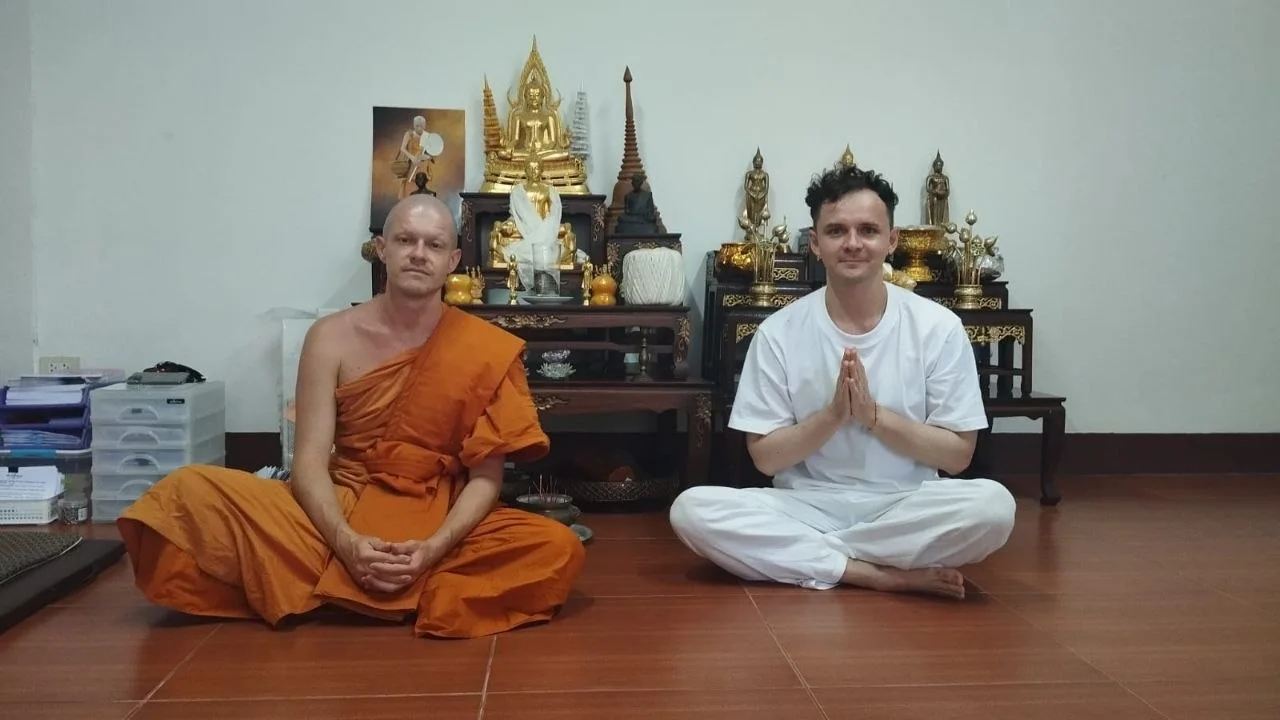
When I decided to go on a vipassana retreat in Thailand, I didn't fully understand what I was signing up for. I'd done vipassana before, in Crimea, but that was a secular practice; this was a centre inside a monastery, and I had no idea how it would all work. Yet inside there was a clear need to stop, slow down and look at my life from the outside.
Seven days without talking, without a phone, without books or entertainment. Just you, your mind and an ancient practice more than 2,500 years old.
What happened in those seven days went beyond all my expectations. It wasn't just a rest or a reset, but a real journey inward — meeting my own mind without embellishment or masks.
Where I did my vipassana retreat
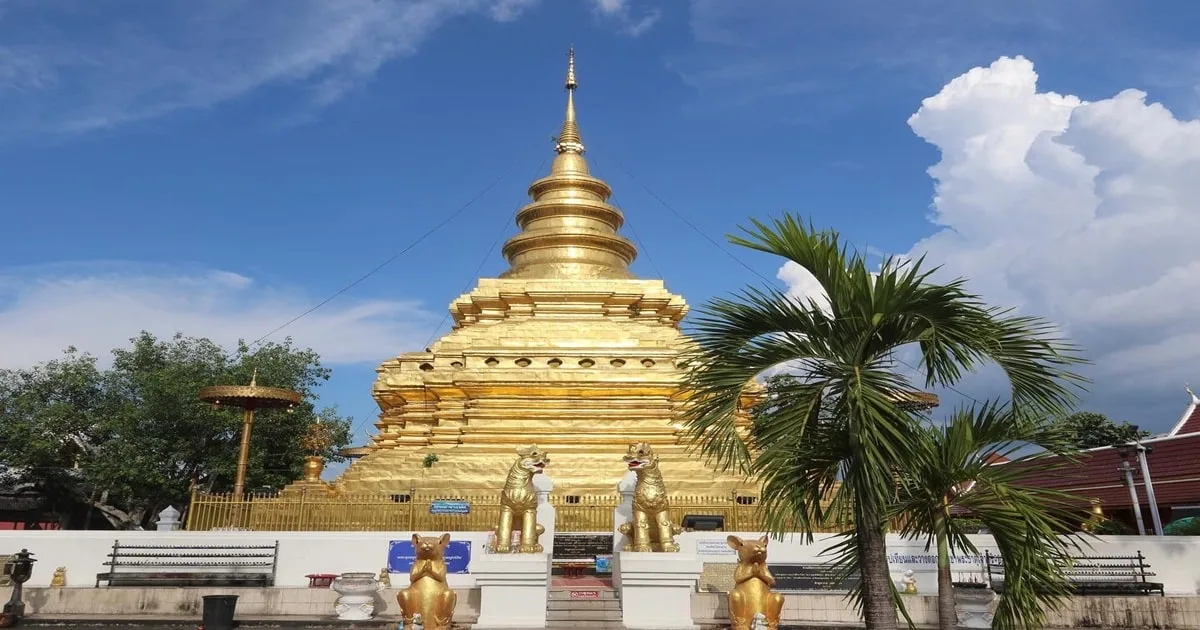
I did the course at Northern Vipassana — International Meditation Center, an international meditation centre at the temple of Wat Phra That Si Chom Thong, in Chom Thong district of Chiang Mai province. Vipassana courses here follow the four foundations of mindfulness in the tradition of Ajahn Tong Sirimangalo — for beginners and experienced meditators, with instruction in several languages.
- Where
- Thailand, Chiang Mai, Chom Thong — Wat Phra That Si Chom Thong
- Website
- northernvipassana.org
- Phone
- +66 93 318 1662
A place of power: the centre and its atmosphere
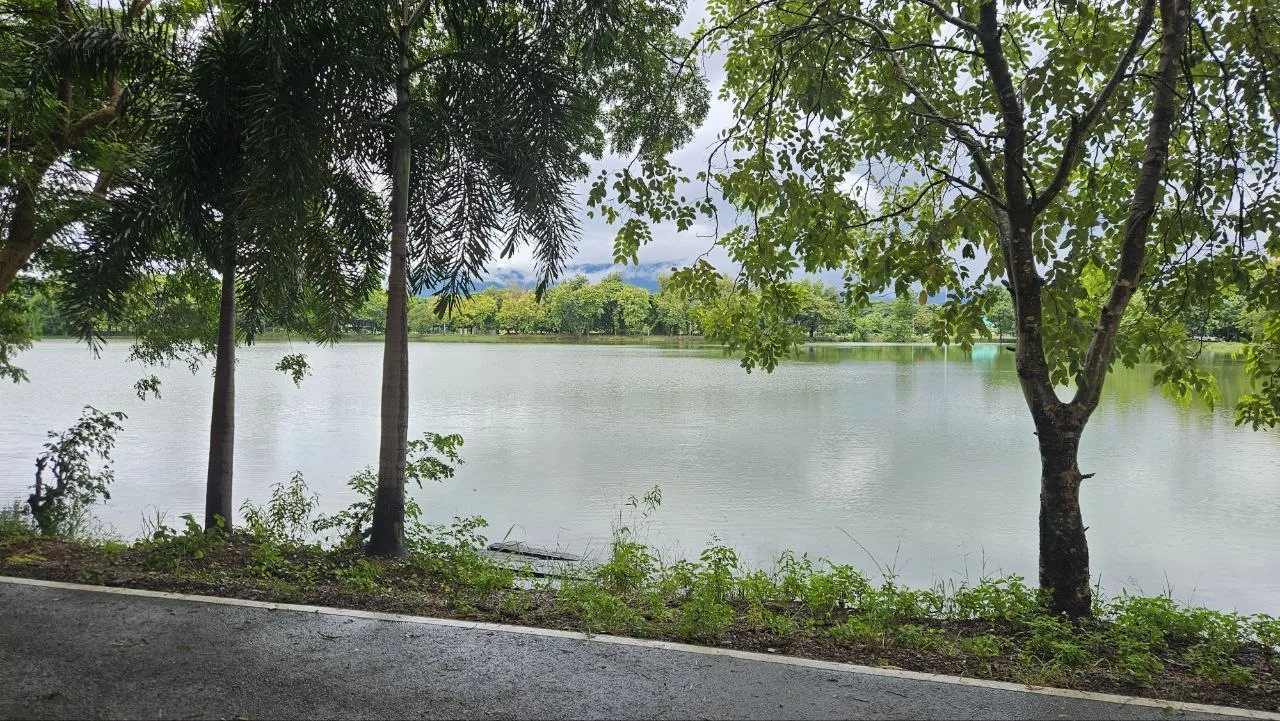
The centre's grounds are huge: there's a whole settlement around it and a large lake you can walk along in peace. The centre is built around a monastery, so many monks live here and there's an atmosphere of service.
For the retreat you get your own spacious room with everything you need: a bed, a private bathroom with a hot shower, a fan, air conditioning, a wardrobe with shelves. There are mosquito nets on the windows and a wooden floor, which makes walking meditation in your room a real pleasure.
The women's and men's quarters are separate. Each has a kitchen and dining room: you can't cook soup, but you can certainly make tea or coffee.
There are four meditation halls: one for women, one for men and a shared one. You can also meditate in your room. On the first day you're given all the cushions and mats you need.
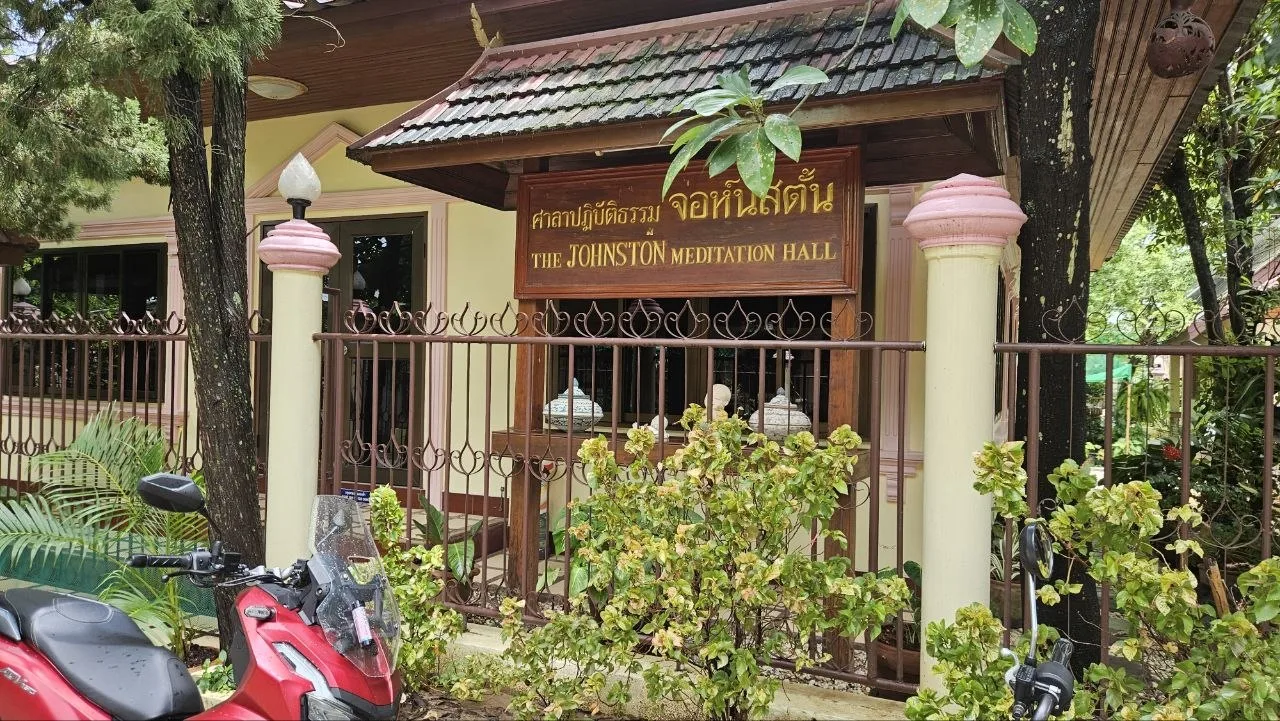
What is a vipassana retreat in Thailand like?
Teaching is one-to-one. Everyone has their own monk teacher, and some speak Russian. You meet your teacher every morning to ask questions and receive guidance. The teacher also gives you interesting questions to observe.
The first day includes an introduction, most likely in English, since students come here from all over the world. If your teacher speaks your language, you can clarify everything with them. There are no group lectures.
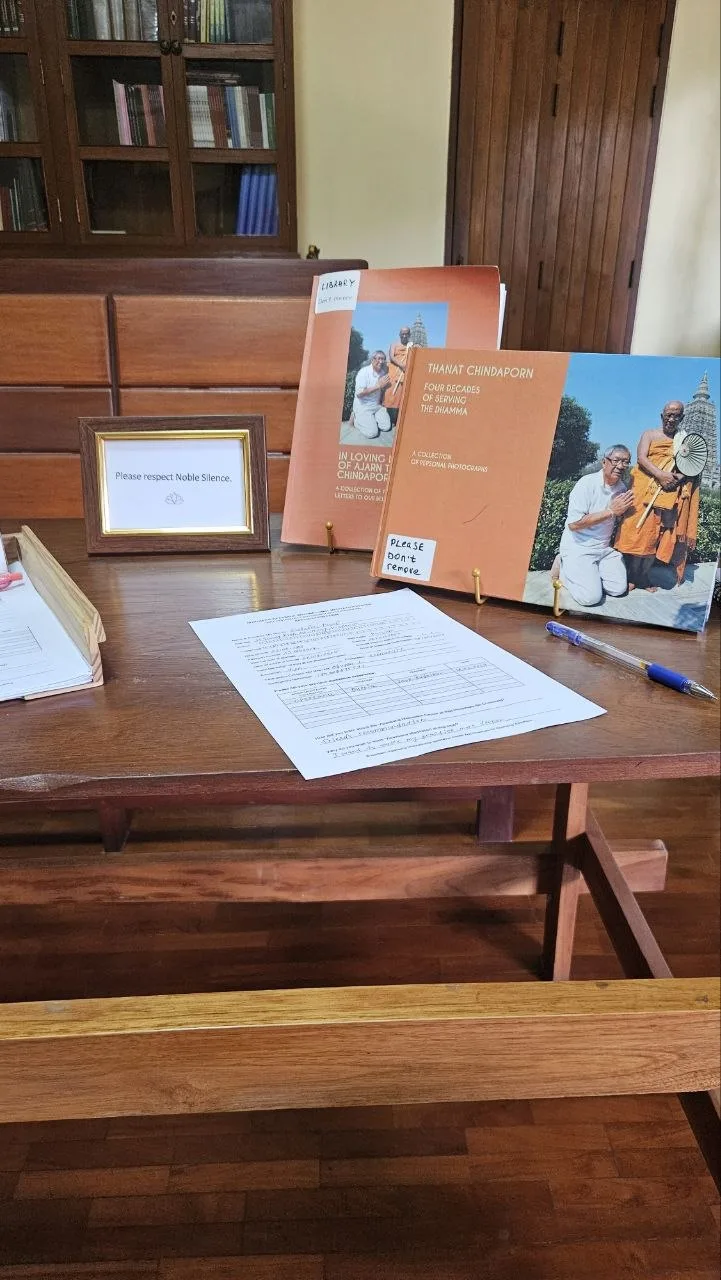
What's special about this centre is that you're left to your own devices. No one watches you or makes you meditate, and there are no group sittings either. So discipline matters a great deal.
The rules
Noble silence is kept throughout the course: you may speak only with your teacher. Phones and all devices are handed in when you check in, and your passport is taken too.
Food
The food is varied and good. There are two meals a day: breakfast from 6 to 7 and lunch from 11 to 12. After noon, no more solid food — only liquids. Breakfast is simple; lunch has more choice: there's always rice and side dishes, and there's a vegetarian menu.
A tip
Don't mix dishes on your plate, and take small portions: some can be very spicy. You can always go back for more.
Stories from life at the centre
On the third day I discovered one of my trainers was missing — the right one; the left was still there. My mind, of course, decided straight away that it had been stolen. In fact, dogs roam the grounds at night, and one had carried it off to play with the laces — they were chewed all over.
On the second day the clock on my timer slipped and started running an hour fast. I didn't notice and woke up at three instead of four. I did all my practices and went to breakfast — and everything was closed. At first I thought I'd overslept, but it was still dark outside, and here it's already light by seven. Then I guessed my clock was off and checked it against the clock in our building's kitchen: sure enough, mine was an hour fast.
Working with doubt
Doubt is one of the five hindrances in practice. It will most likely come as questions like “why am I doing this?”, “nothing's working”, “am I doing it right?” You'll want to leave.
I found an answer for myself that helped:
“Right now I'm in the best place I could possibly be. There are billions of people on the planet, and only a handful end up here — and right now I'm one of them. I have a chance to make a real contribution to my spiritual growth and to improve my own life and the lives of those close to me. I can't give up: life is unpredictable and short, and there may never be another chance like this.”
Insights from the practice
Over the course of the practice, several important insights came:
- Everything is impermanent
- Every second, everything changes. No step and no breath is ever repeated.
- Anxiety comes from wanting control
- I saw very clearly how the mind is constantly anxious, and that the source of most anxiety is the wish to control everything. That's the mind's nature: to think and to control. The wish for control can be obvious or hidden. The sooner we notice what exactly we're trying to control, the sooner we find the cause of our anxiety. On a vipassana retreat this is especially clear, and you learn to recognise and let go of these habits of mind quickly.
- The nature of thoughts
- Thoughts keep coming and going. If you don't follow them but simply notice them, they have no power over you.
The centre's special atmosphere
There's no fixed fee and no registration charge, only a voluntary donation for the centre's needs — dana. Seeing how hard and how kindly people here work and care for the students, it's impossible to leave without giving something.
You're given everything: support, your own room, cushions and mats, meditation halls, clothes, food. And in return you're asked for just one thing — to practise diligently and with discipline. That wins you over: you can see people genuinely care about your progress and carry a wholesome mission. You rarely come across that these days.
What vipassana is
Vipassana means “clear seeing” or “insight”. On a vipassana retreat we learn to see the true nature of things and notice how body and mind work. It's an ancient Buddhist meditation practice that has come down to us through a lineage of teachers going back to the Buddha himself.
A vipassana retreat in Thailand at a centre like this isn't secular meditation but canonical satipatthana, with all the Buddhist rules. There are Buddha statues in the halls, and before practice you bow three times as a sign of respect for the teaching. You learn three kinds of meditation: bowing, walking and sitting.
Why practise mindfulness
The Buddha named five reasons to practise:
- 1
Purifying the heart and mind
Practice frees us from the mind's defilements — greed, aversion and delusion — which cloud our natural clarity.
- 2
Overcoming sorrow and grief
By watching the nature of emotions, we learn not to identify with them or drown in the suffering they bring.
- 3
The end of suffering
Vipassana shows how we ourselves create suffering through attachment and resisting reality.
- 4
The true path
Practice gives a deep understanding of what really matters, and helps tell the passing from the lasting, the shallow from the deep.
- 5
Final liberation
The highest goal of practice is Nibbana, complete freedom from the cycle of suffering.
The principles of practice
Vipassana rests on the four foundations of mindfulness — satipatthana:
- mindfulness of the body and bodily sensations
- mindfulness of feelings
- mindfulness of the mind and its states
- mindfulness of phenomena — dhammas
The practice teaches you to see three characteristics of everything that exists: impermanence (everything changes), unsatisfactoriness (suffering) and the absence of a permanent self (everything is interconnected and doesn't exist on its own).
In closing
Vipassana doesn't give ready-made answers — it teaches you to ask the right questions. It doesn't solve your problems — it shows how many of them the mind creates itself. It doesn't promise an easy life — it gives you tools to work with difficulties.
The most valuable thing I took from this experience is the understanding that happiness doesn't depend on outside circumstances. It comes from the ability to be in the moment, accept what is, and not cling to what's passing.
Vipassana isn't a magic pill for every ill, but it's a powerful tool for knowing yourself. It asks for honesty with yourself, a readiness to face your fears and to let go of familiar patterns of thinking. And after the retreat it's easy to keep practising at home: start with short daily meditations, for example with the MYZA timer.
If you feel the need for deep change, want to understand yourself better and learn to be happy whatever the circumstances, vipassana may be exactly the experience you need. The main thing is to be ready to meet yourself.
Frequently asked questions
How much does a vipassana retreat in Thailand cost?+
At the centre I went to there's no fixed fee and no registration charge. Your room, food, clothes and teaching are all given for free, and at the end you can leave a voluntary donation for the centre's needs — dana.
Can you use your phone during vipassana?+
No. Phones and all devices are handed in when you check in, and your passport is taken too. Noble silence is kept throughout: you may only speak with your teacher at the morning meeting.
What language is the teaching in?+
The introduction on the first day will most likely be in English, since students come from all over the world. After that, teaching is one-to-one, and some of the monk teachers speak Russian.
What is the food like on a vipassana retreat in Thailand?+
There are two meals a day: breakfast from 6 to 7 and lunch from 11 to 12. After noon, no more solid food — only liquids. The food is varied, there's always rice and side dishes, a vegetarian option, and some dishes are very spicy.
What if you want to leave during vipassana?+
That's normal: doubt is one of the five hindrances in practice. What helped me was the thought that I was in the best place I could be, and that this chance might never come again, because life is unpredictable and short.
MYZA Team
MYZA is a meditation app: a timer with gongs, a practice journal, short courses on meditation and Buddhism, and a guide who helps you make sense of your practice.
Try MYZA